The Palestinian concept of sumud is often translated as steadfastness, and framed as steadfastness in the face of occupation. In fact, sumud is an ancient Palestinian concept of agricultural steadfastness in the face of obstacles ranging from harsh weather that destroys harvests to occupiers who have pillaged the land and oppressed the people. Sumud is steadfastness that insists on centering the deep-rootedness of the Palestinian people in the face of challenges and oppression through the millennia.
Palestinian cultural heritage is, at the heart of it, fallahi culture. Fallaheen—peasant farmers—have tended the land for centuries and are today the backbone of Palestinian agricultural work. It was the farmers who wore the keffiyeh, today a symbol for Palestinian resistance and liberation, as a simple head-covering to protect them from the elements.
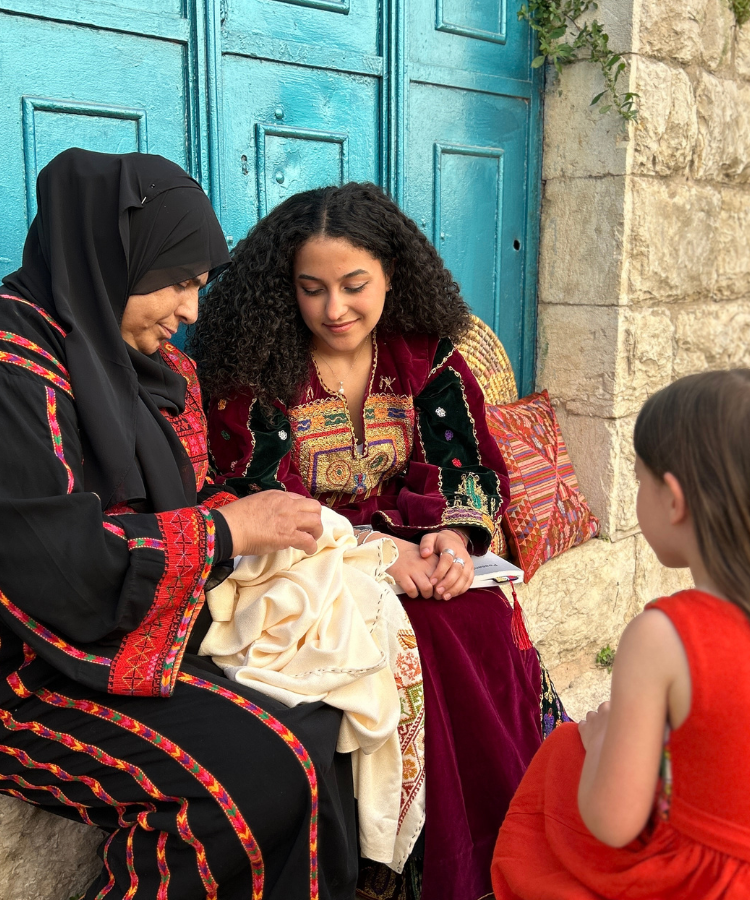
Fallaheen women cross-stitched onto their traditional thobes for decoration and developed the motifs that we know today. Tatreez creates a tableau of cultural identity, weaving stories about home, memory, and the land, and other resonant themes of Palestinian life. A woman in a thobe is a living, breathing piece of art, signifying moments or places of importance to her.
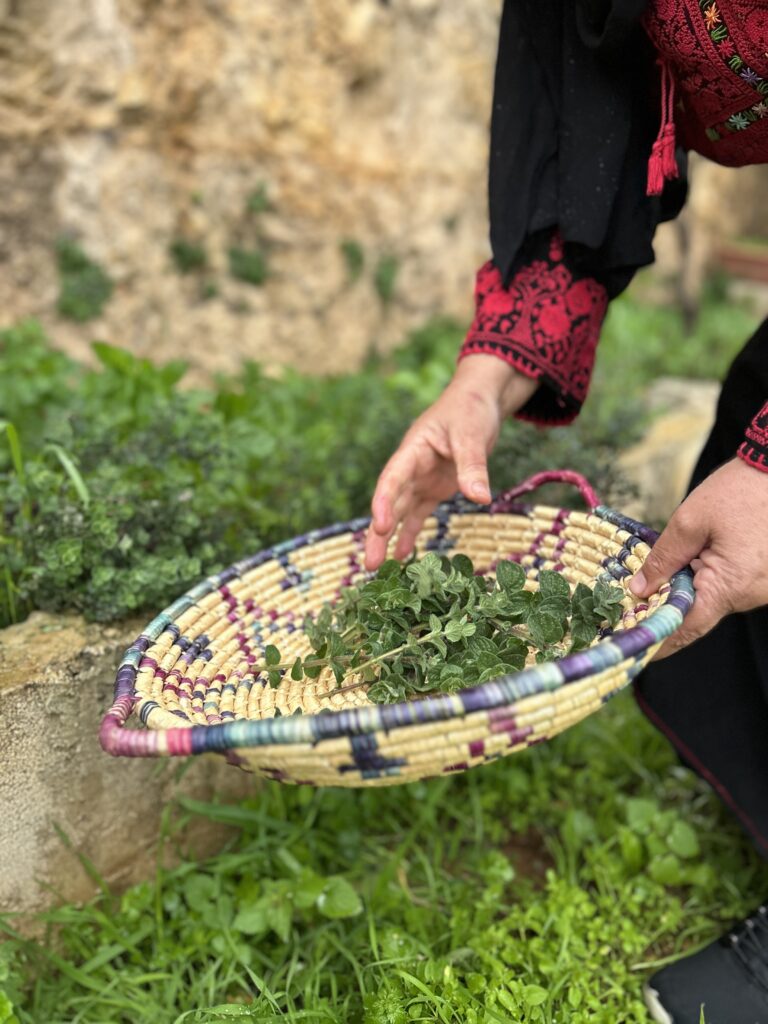
It was the fallaheen in centuries past who planted the ancient grains and collected the seeds for the next season and the next generations. It was the fallahi farmers who harvested the wheat and their wives who wove the straw baskets to hold that wheat. They pruned and harvested the olive trees and made the soaps. They picked and dried the wild zaatar and pounded it into a unique blend found on every Palestinian table. Palestinian cultural heritage is alive and deeply rooted in the land and the fallaheen’s ancient and sacred relationship to that land through the millennia.
Our support for Palestinian cultural heritage and for those who continue to preserve and share the culture of Palestine is grounded in two intertwined projects that are deeply intertwined in this historical relationship of people to the traditional arts and to the land. Mashjar Juthour, a nature preservation site dedicated to natural heritage (wild and agricultural), and Manjel Ma’qoud, a women’s income generation project to preserve and promote traditional crafting.
Mashjar Juthour is not a wilderness preserve empty of people.
Children grow up here.
Volunteers work here.
Schools visit.
The land is cared for with community, not away from it.
Juthour is the first Palestinian arboretum and the first mountain-scale nature preserve project in the region, built on regenerative principles. Juthour is designed to function across multiple human lifetimes, unlike most projects that plan for 3-5 years. Its charter and governance structures reflect this long-term commitment. Decisions are guided by written, enforceable values rather than by individual personalities or short-term pressures.
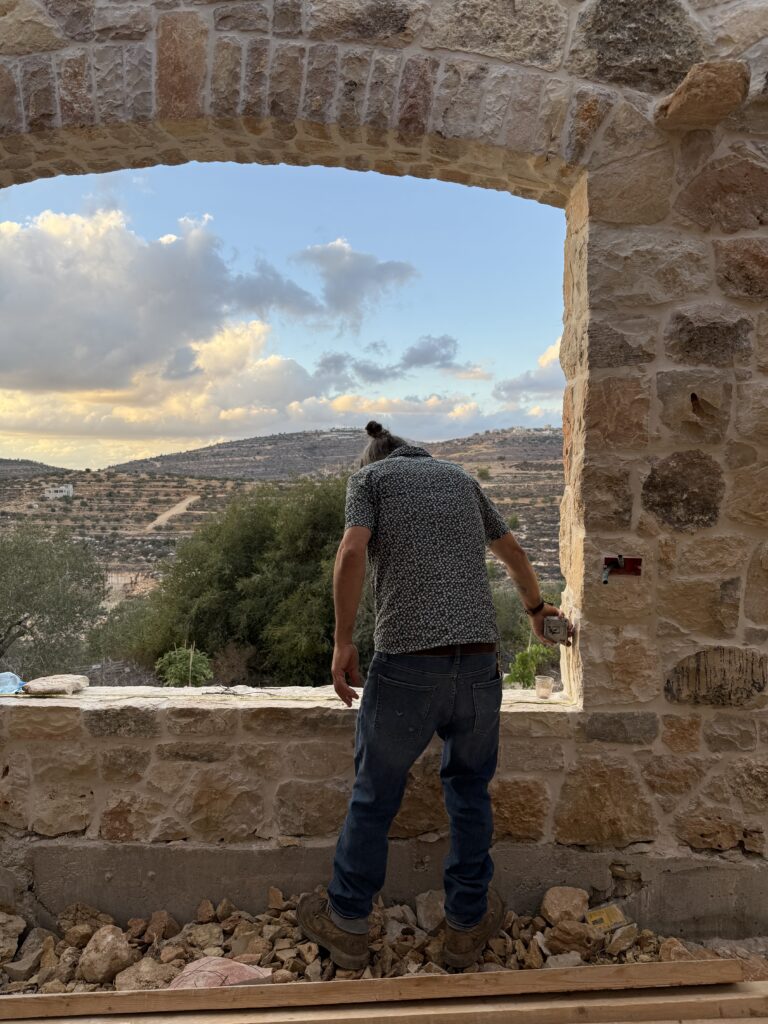
Juthour doesn't just talk about regeneration—it models it. Green building, composting, water harvesting, and traditional land care are all visible and replicable. In Area C under Israeli occupation, protecting and regenerating Palestinian land is both ecological work and cultural survival. Juthour demonstrates what Palestinians can create even under constraint. Handmade Palestine sustains the land of Mashjar Juthour, while the land provides materials (olive wood prunings) and meaning to the crafts.
Profit serves preservation, not extraction.
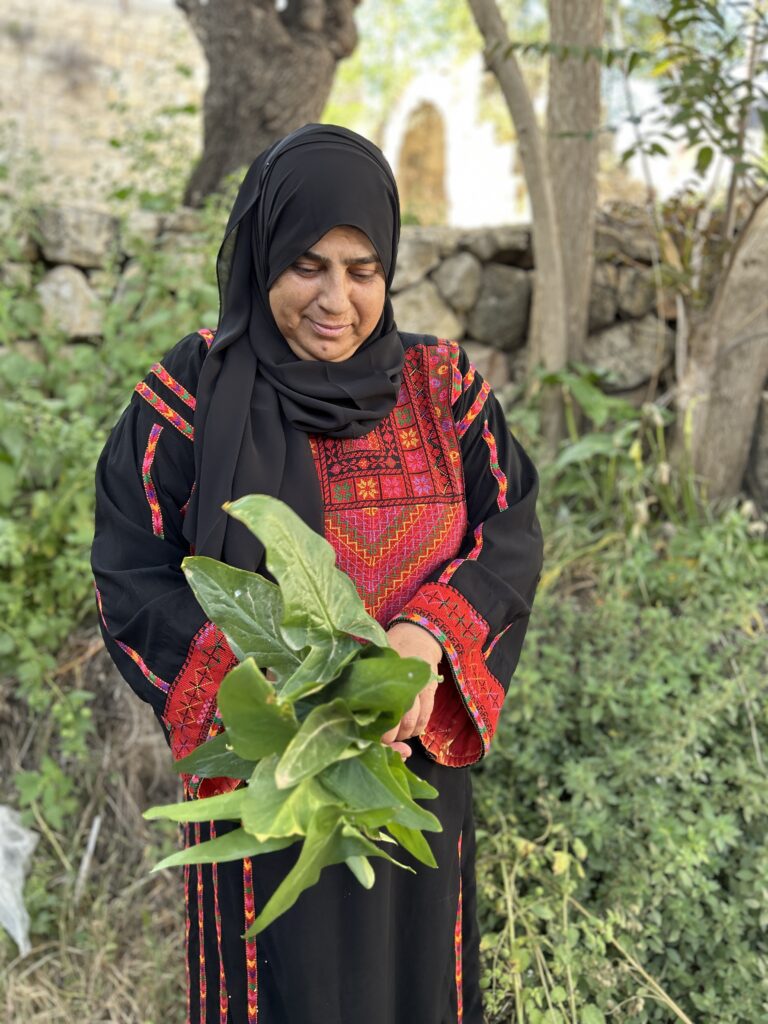
Our mission to empower Palestinian women and keep the art of tatreez alive is manifested in Manjel Ma’qoud, which offers training and employment opportunities, particularly for women in rural areas.
Manjel Ma’qoud is not just a job—it’s a lifeline.
This project brings women together to foster a deep sense of community and shared purpose, binding women in their connection to each other and to their heritage.
Manjel Ma’qoud will open Dal alTurath, a women-led, income-generating House of Heritage in Ramallah for creative women and youth who want to learn and preserve traditional Palestinian arts and crafts. The space will bring women artisans into the public sphere where their creative work can be exhibited, sold, and generate income while being taught to others, supporting income generation for Palestinian women and ensuring that the traditional arts are preserved and passed down to younger generations.